

Frozen Food Market to Reach US$651.10 Billion by 2032 Driven by Convenience Demand, Urban Lifestyle and Retail Expansion
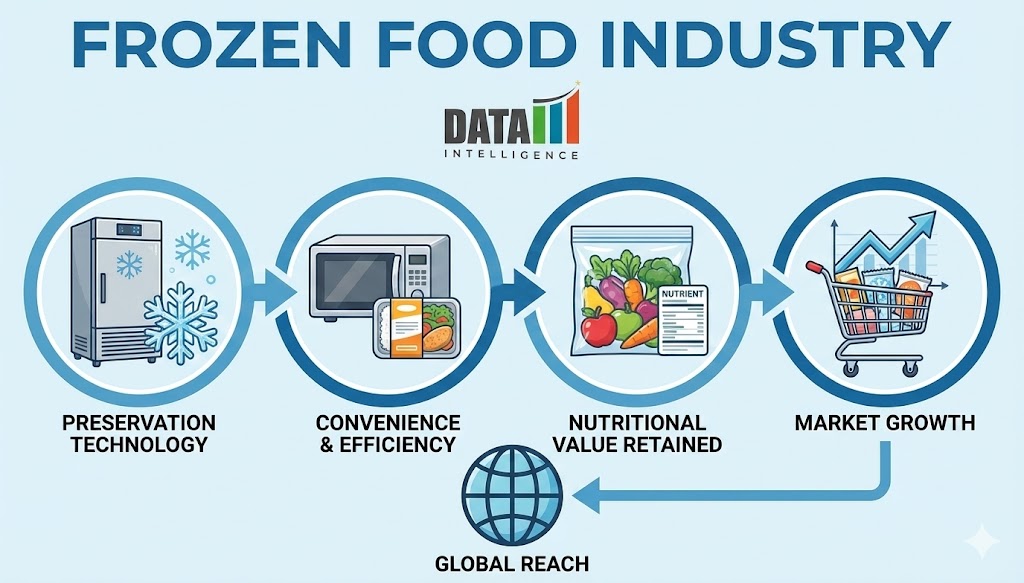
Global Frozen Food Market
Rising demand for convenient, longer shelf life foods and expansion of retail and online channels are fueling global frozen food market expansion worldwide.
Busy lifestyles and demand for ready meals and nutritious frozen options are driving global frozen food growth as consumers seek convenience without sacrificing quality.”
LEANDER, TX, UNITED STATES, December 19, 2025 /EINPresswire.com/ -- According to DataM Intelligence, the global frozen food market was valued at approximately US$425.21 billion in 2024 and is projected to reach US$651.10 billion by 2032, expanding at a compound annual growth rate of 5.6 per cent during the forecast period 2024-2032. Market growth is driven by increasing consumer demand for convenience foods, rising adoption of online grocery shopping, and expanding cold chain infrastructure that ensures product quality from production to point of sale. Ready meals and snacks represent key product segments due to high demand from urban populations and younger consumers.— Sai Teja Thota | Research Head
𝗚𝗲𝘁 𝗮 𝗦𝗮𝗺𝗽𝗹𝗲 𝗣𝗗𝗙 𝗕𝗿𝗼𝗰𝗵𝘂𝗿𝗲 𝗼𝗳 𝘁𝗵𝗲 𝗥𝗲𝗽𝗼𝗿𝘁 (𝗨𝘀𝗲 𝗖𝗼𝗿𝗽𝗼𝗿𝗮𝘁𝗲 𝗘𝗺𝗮𝗶𝗹 𝗜𝗗 𝗳𝗼𝗿 𝗮 𝗤𝘂𝗶𝗰𝗸 𝗥𝗲𝘀𝗽𝗼𝗻𝘀𝗲): https://www.datamintelligence.com/download-sample/frozen-food-market
The global frozen food market has evolved into a major segment of the food industry as consumer preferences shift toward convenient, easy-to-prepare meals that offer reliable quality and extended shelf life. North America currently leads the global frozen food landscape, supported by strong retail penetration, advanced cold chain capabilities, and high consumer spending on convenience foods. Meanwhile, Asia Pacific is expected to register significant growth due to urbanization, rising disposable incomes, and increasing awareness of frozen food benefits among emerging middle-class populations.
Key Highlights from the Report
➤ Global frozen food market projected to grow at a CAGR of 5.6 percent through 2032
➤ Ready meals and snacks are high demand product categories
➤ Retail and e-commerce channels are expanding frozen food distribution
➤ Urbanization and busy lifestyles are key consumption drivers
➤ North America leads market share while Asia Pacific shows fastest growth
➤ Technological advancements in freezing and packaging enhance product quality
Market Segmentation
By Product Type, the frozen food market includes fruits and vegetables, meat and seafood, bakery products and snacks, ready meals, desserts, beverages, and other specialty items. Frozen fruits and vegetables maintain strong demand due to convenience and preservation of nutrients, while ready meals have grown rapidly in recent years because they meet consumer needs for quick and satisfying meals.
Frozen meat and seafood products are key revenue generators as they provide extended shelf life and consistent quality for proteins that may otherwise spoil quickly. Desserts and frozen beverages cater to indulgence trends, especially among younger demographics.
By Distribution Channel, the market is segmented into B2B and B2C channels. The B2B channel involves food service providers, hotels, restaurants, and institutional buyers who prefer bulk frozen food products for reliable inventory management and cost efficiency. B2C channels include supermarkets and hypermarkets, convenience stores, and online grocery platforms. Online channels are experiencing rapid growth as consumer preferences shift toward digital purchasing due to convenience and broader product choice.
By Freezing Technology, advanced techniques such as Individual Quick Freezing (IQF), blast freezing, and belt freezing are widely used to preserve freshness, taste, and texture. IQF is especially popular because it allows individual pieces to be frozen separately, maintaining product quality and convenience for end users.
By End Use, frozen food products are consumed at home, in food service establishments, and through institutional food programs. Household consumption remains the largest segment, driven by busy families, dual-income households, and a preference for ready-to-cook or ready-to-eat products.
Looking For A Detailed Full Report? Get it here: https://www.datamintelligence.com/research-report/frozen-food-market
Regional Insights
North America continues to dominate the global frozen food market due to high consumer demand for convenience foods, robust retail networks and extensive cold chain infrastructure. The United States accounts for a large share of market revenue, supported by established manufacturing and distribution systems, widespread supermarket penetration, and growing online grocery adoption.
Europe holds a substantial share, with strong consumption in countries such as Germany, France, and the UK. European consumers increasingly prioritize frozen foods for convenience and reduced food waste, and the region benefits from a long tradition of frozen product adoption in retail and food service sectors. Sustainability trends are also influencing product formulations and packaging innovations.
Asia Pacific is witnessing rapid growth as urbanization accelerates and disposable income levels rise. Countries such as China, India, Japan, and Southeast Asian nations are expanding cold chain infrastructure and modern retail channels, making frozen foods more accessible to a larger population. Changing lifestyles, increased female workforce participation, and expanding hotel and food service industries further contribute to market growth.
Latin America and Middle East & Africa are emerging as growth regions as retail modernization, consumer awareness, and investments in cold storage infrastructure improve market accessibility. Urban expansion and rising middle class populations in these regions are expected to boost frozen food consumption in the coming years.
Market Dynamics
Market Drivers
Rapid urbanization and changing lifestyles have led to increased demand for convenience foods, especially frozen meals and snack products that offer quick preparation and consistent quality. Dual-income households, busy professionals and students are key consumer groups driving this trend. Expansion of e-commerce and online grocery platforms has made frozen food products more accessible, further fueling market demand.
Technological advancements in freezing and cold chain logistics help retain food texture, flavor and nutrients, encouraging consumers to choose frozen options over fresh alternatives. Enhanced freezing methods such as individual quick freezing and improved packaging solutions also support product quality and reduction of food waste.
Market Restraints
Despite strong growth, the frozen food market faces challenges such as consumer perceptions about freshness and nutritional value compared to fresh food. While modern freezing techniques retain many nutrients, some consumers still prefer fresh options, which can limit market penetration in certain segments. Cold chain infrastructure requirements, especially in developing regions, pose challenges due to high capital costs and logistics complexity. Small and medium sized producers may find it difficult to invest in advanced freezing and storage systems, limiting their capacity to compete with larger manufacturers.
Market Opportunities
Opportunities in the frozen food market include expansion into emerging markets where urbanization and modern retail growth are accelerating. Manufacturers can benefit from product innovation such as healthier frozen meal options, organic and plant-based frozen foods, and premium ready meals that cater to evolving consumer preferences.
Growth in online retail channels provides an opportunity to reach new consumer segments and increase market share. Partnerships between frozen food brands and online grocery platforms can enhance visibility and drive sales.Improvements in sustainable packaging and energy efficient storage solutions can also appeal to environmentally conscious consumers and reduce operational costs for producers and retailers.
Get Customization in the report as per your requirements: https://www.datamintelligence.com/customize/frozen-food-market
Reasons to Buy the Report
✔ Comprehensive market forecast and growth insights through 2032
✔ Detailed segmentation by product type, distribution channel, technology, and end use
✔ In depth regional analysis highlighting growth drivers and opportunities
✔ Clear understanding of market dynamics including drivers, restraints, and opportunities
✔ Competitive overview to help stakeholders assess key players and strategies
Frequently Asked Questions (FAQs)
◆ How big is the global frozen food market?
◆ What is the projected growth rate (CAGR) of the frozen food market through 2032?
◆ Which product category dominates the frozen food market?
◆ Which region is expected to lead the frozen food market?
◆ What are the key trends shaping the frozen food market?
Company Insights
Key players operating in the global frozen food market include:
• Nestlé
• General Mills
• Tyson Foods
• Conagra Brands
• Unilever
• McCain Foods Limited
• Pinnacle Foods
• Kraft Heinz Company
• Groupe Bimbo
• Ajinomoto Co
Recent Developments:
✅ In November 2025, Nestlé announced a strategic partnership with a major e-commerce platform to increase frozen food distribution and enhance cold chain delivery services in urban markets.
✅ In October 2025, Tyson Foods expanded its frozen ready meal lineup with new high-protein and plant-based options targeting health and wellness-focused consumers.
Conclusion
The global frozen food market is set for sustained growth through 2032, supported by rising demand for convenient, quality food products that align with modern lifestyles. North America and Europe remain key markets with established infrastructure and strong consumer demand, while Asia Pacific is expected to grow rapidly with expanding retail channels and increasing disposable incomes.
Innovation in product development, freezing technology, and distribution channels will continue to shape the competitive landscape. Frozen foods that cater to health, nutrition, and convenience trends are likely to capture higher market share. Strategic investments in cold chain logistics and online retail partnerships will further enhance accessibility and fuel long-term market expansion.
Sai Kiran
DataM Intelligence 4market Research LLP
+ +1 877-441-4866
sai.k@datamintelligence.com
Visit us on social media:
LinkedIn
YouTube
X
Legal Disclaimer:
EIN Presswire provides this news content "as is" without warranty of any kind. We do not accept any responsibility or liability for the accuracy, content, images, videos, licenses, completeness, legality, or reliability of the information contained in this article. If you have any complaints or copyright issues related to this article, kindly contact the author above.
